In our world, many of our scientific discoveries are halted by the faith in our religion. Cloning, stem cell research etc are rejected by the church in saying just one simple thing: “Who are we to play God?” In a way it is true that we are using our technology to alter or modify the life God has given us.

“Designer baby” is only a term used by the media, which stands for genetically modified babies. If genes are altered, scientist can give it specific characteristics like physical ability, intelligence, looks etc. So it is possible to create the perfect baby by using this man made method. Despite all the criticism that goes around, a designer baby is not 100% bad. In fact, this modelling can propel our human race forward on a substantial rate. On our first view of designer babies, we think it’s immoral or wrong for doing such a thing and that’s because we believe that “We are not to play God”. Yet, looking into this more deeply, it is possible to find out more facts about this genetically altered baby.
A debatable fact about designer babies is the choice a parent can make about the gender and characteristics the baby will have. This genetic modification can allow parents to choose how they want their child to look like. Is this good or bad? Do parents have a right to choose how their baby is to look? Personally, I have no answer for that. I think that God made babies to be similar to their parents. It is because of the joining of two haploids that makes us very different from each other, but at the same time show resemblance of our family. Is it really a good thing to step over the boundaries set by God? On the religion trip (places of worship), Mr. Morra asked a Sikh why the Sikhs never cut their hair. The Sikh replied with another question “Why should I cut my hair? God had made us with hair and who are we to take it away” Why is that man have moustaches but females don’t (most females). Therefore, God created it for a purpose and there is no reason why we should discard it.
Equipped with his five senses, man explores the universe around him and calls the adventure Science. ~Edwin Powell Hubble, The Nature of Science, 1954
We humans have a tendency to explore things in our world. We try to find all the answers and that is what distinguishes us from other animals. Yet, many times, we fail to realize that we hurt other species while we make these advances. We don’t realize their importance until it’s too late.
HOW IS THIS DONE?
To make a designer baby, scientists first have to fertilize the egg outside the mother’s womb through an advanced reproductive technique called In-Vitro Fertilisation (putting it back in?). After the egg is fertilized, the egg is put back into the mother until birth. By using this technique, doctors and parents can reduce the chance that a child will be born with a genetic disorder. By choosing the type of sperm that will fertilize the egg, it is possible to depict whether the offspring will be a male or a female. Scientists will also scan the embryo for certain diseases and only the selected ones will go back to mother’s body. The rest will be discarded which is similar to have an abortion. With this method, we have complete control over how babies are to be born. And no longer will parents have to worry about genetic disorders.
href="file:///C:%5CUsers%5CVARGHE%7E1%5CAppData%5CLocal%5CTemp%5Cmsohtmlclip1%5C01%5Cclip_colorschememapping.xml">
THE GOOD
There are many people in the world who have genetic disorders caused by the abnormalities in chromosomes. Down syndrome occurs in 1 in 800 births and that is not even the end of the genetic disorders that can happen to an individual. By genetic modification and screening, it is possible to reduce the chances of these diseases significantly. Many lives on earth can be saved by this process of genetic modification.
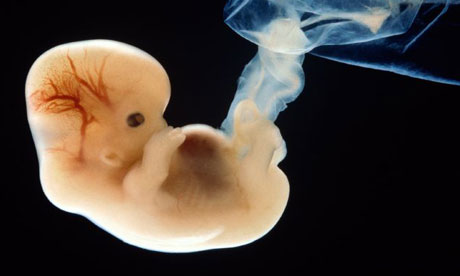
In case you are wondering, yes the first genetically altered baby has been created under the name of Adam Nash. He wasn’t given any kind of greater intelligence or athletic ability (or so we are told) etc. He was created so he would possess the right cells to save his dying sister. He was created by the revolutionary pre-implantation process in the year 2000. Scientists had specifically chosen the cells, so that he would not get the same diseases as his sister and a way to cure his sister. His sister suffered from Fanconi’s anaemia (blood disorder). If Adam was born normally, the chances that he would suffer from this are fairly high. Yet, with the help of genetic modification, he had saved his and his sister’s life.
Another baby was born to a similar reason in 2003 and had been successful. These incidents had saved peoples life and I doubt if it was used in an immoral way. Designer baby is a creation by humans that can be considered a major immoral occurrence, but not necessarily so, when controlled. All we have to do is make sure we don’t misuse it, but given our human nature it will be difficult to do so.
Parents of babies don’t want to see their young ones die. In fact, they want their kids to grow perfectly and rise to become the best. They would never want their son/daughter to die. Should we deny their right for having a designer baby? They could just have a designer baby to prevent any genetic disorders.
THE BAD
Having a designer baby has a lot of down sides to it. Human biodiversity will be greatly influenced to the creation of designer babies. If designer babies are created, most parents would want them to be the best looking and want them to have the physical and mental characteristics. The whole world that we live in will be revolutionized. There is a book that I forgot but it talks about genetically modified humans given a specific role the moment they are born. So their genes are modified to make sure that they are fit for that duty. In this case, an individual person has no freedom to choose their own path, but must follow what they are given.

Another major problem that can happen is the conflicts with the designer babies and the normal people. Naturally, the genetically modified baby will have greater advantage in society, which will elevate hatred between the normal people and the designer babies. A popular anime series, Gundam Seed depicts a war story between superior genetically modified humans to the normal human race. Think about a person in our school who keeps getting 100% in every subject (besides of course English), and he is a superstar in sports teams. You soon learn that he is a genetically modified baby, who is given superior intellect and physical ability. How would that make you feel? Naturally hate no?
When everyone is at the top, there will be no one at the bottom. That means that everyone will have a high standard of intellect and other things. This means that the whole world standards are increased but it also means that no one fills the gaps at the bottom. Of course there are ways around it like robots doing the dirty work, but this will revolutionize the whole world.
First of all, only certain countries that can afford or have the technology of creating ‘super designer babies’ will make them. This means that there will be shifts in power as there would be more Captain America’s in some countries while none for others. If Hitler lived in our time his dream of ‘perfect soldiers’ would come alive.
PLAYING GOD?
Catholicism, rejects the idea of designer babies. It is believed to be playing God and we have no right to shape life. Pope Benedict specifically condemned genetic engineering and other scientific practices that allow people to select designer babies.
The Pope quoted “In developed countries, there is a growing interest for the most sophisticated biotechnological research to introduce subtle and extensive eugenics methods in the obsessive search for the ‘perfect child’”
It’s not only Christians, but many other religions believe that life is a sacred thing that was given to us by God, creating or manipulating is like making a mockery of God’s work (only if you take it that way).
CONCLUSION:
Designer babies are not necessarily a bad thing. I think that we are being optimistic when we say designer babies are ‘immoral and unethical’. There are many people in the world that suffer from genetic diseases and we should ask why them? A faulty gene of the parents changes the entire life of an individual. If we limit our genetic modification, i.e. only use it to prevent disorders and not completely pick what features the baby should have, this world would be a better place. This does not mean I’m entirely for designer babies. There is another major problem with designer babies not mentioned above. In biology we learned that to ensure survival, biodiversity is important. So if we completely create designer baby, and an environmental factor that does not favour the designer babies come, the human race will reach extinction. But, when there are different people, not all the population will die, in fact the resistant ones will reproduce and pass the genes and create a greater biodiversity.
href="file:///C:%5CUsers%5CVARGHE%7E1%5CAppData%5CLocal%5CTemp%5Cmsohtmlclip1%5C01%5Cclip_colorschememapping.xml">
I mean come on, to make this blog interesting, I can’t just talk about the negative sides of designer babies. There should be at least a couple of people who kinda agrees with designer babies to have a exciting debate. Besides you never know how many countries actually started this genetic modeling behind the public back.
Is it unethical? Maybe and maybe not, depending on how you look at it
href="file:///C:%5CUsers%5CVARGHE%7E1%5CAppData%5CLocal%5CTemp%5Cmsohtmlclip1%5C01%5Cclip_colorschememapping.xml">
WORK CITED
href="file:///C:%5CUsers%5CVARGHE%7E1%5CAppData%5CLocal%5CTemp%5Cmsohtmlclip1%5C01%5Cclip_colorschememapping.xml">
http://news.bbc.co.uk/2/hi/talking_point/4493203.stm
http://www.buzzle.com/articles/pros-and-cons-of-designer-babies.html
http://www.time.com/time/magazine/article/0,9171,989987,00.html
http://www.cbsnews.com/stories/2003/06/19/tech/main559430.shtml
http://www.cbsnews.com/stories/2009/03/03/earlyshow/health/main4840346.shtml
http://www.jesus-is-savior.com/End%20of%20the%20World/Genetics%20Nightmare/designer_babies.htm
http://www.hplusmagazine.com/articles/bio/great-designer-baby-controversy-%E2%80%9909


